
Sun Safety at Work: Protecting Outdoor Workers from UV Exposure

When employers think about workplace health risks, hazards such as noise, vibration, hazardous substances, and manual handling often come to mind. However, one risk that is frequently overlooked, particularly during the summer months, is exposure to ultraviolet (UV) radiation from the sun.
For employees who spend significant periods working outdoors, UV exposure is an occupational hazard that can have serious long-term consequences. While many people associate sunburn with a temporary inconvenience, excessive exposure to UV radiation can lead to premature skin ageing, eye damage, and an increased risk of skin cancer.
With warmer weather encouraging more time outdoors, now is the ideal opportunity for employers to review their approach to sun safety and ensure appropriate controls are in place.
Why Sun Safety Matters
Skin cancer is the most common cancer in the UK, and rates of melanoma continue to rise. The primary cause of most skin cancers is exposure to ultraviolet radiation from the sun or artificial sources such as sunbeds.
Unlike heat, UV radiation cannot be seen or felt. This means employees can be exposed to harmful levels even on cooler or cloudy days. UV radiation can also pass through light cloud and reflect off surfaces such as water, glass, concrete, and metal, increasing exposure levels without people realising.
Outdoor workers are particularly at risk due to the amount of time they spend exposed to UV radiation. Sectors commonly affected include:
Construction
Agriculture
Utilities
Grounds maintenance
Highways and transport
Outdoor leisure and recreation
However, any employee who spends significant periods working outside can be affected.
Understanding the Health Risks

The sun produces several forms of radiation. Infrared radiation provides warmth, while ultraviolet radiation is responsible for skin damage and increased cancer risk.
Melanoma
Melanoma is less common but more serious because it can spread to other parts of the body if not identified and treated early.
Common warning signs include:
A new mole appearing
Changes in the size, shape, or colour of an existing mole
Irregular borders
Multiple colours within the same mole
Itching, bleeding, or crusting
Non-Melanoma Skin Cancer
Non-melanoma skin cancers include Basal Cell Carcinoma (BCC) and Squamous Cell Carcinoma (SCC). These cancers often present as unusual patches of skin, persistent sores, raised growths, or areas that bleed, crust over, or fail to heal.
While these cancers are generally less likely to spread than melanoma, early detection remains important and can significantly improve treatment outcomes.
Why Employers Have a Role to Play
Many employers are surprised to learn that sun safety falls within their wider health and safety responsibilities.
Under the Health and Safety at Work etc. Act 1974, employers have a duty to protect the health, safety, and welfare of employees so far as is reasonably practicable. For organisations with employees working outdoors, this means considering UV exposure as part of workplace risk assessments and implementing suitable control measures where necessary.
Failing to manage the risks associated with sun exposure can result in long-term health consequences for employees, increased sickness absence, reduced productivity, and potential legal and reputational risks for employers.
Sun safety should therefore be viewed in the same way as any other occupational health risk, requiring a structured and proactive approach to prevention.
Applying the Hierarchy of Controls
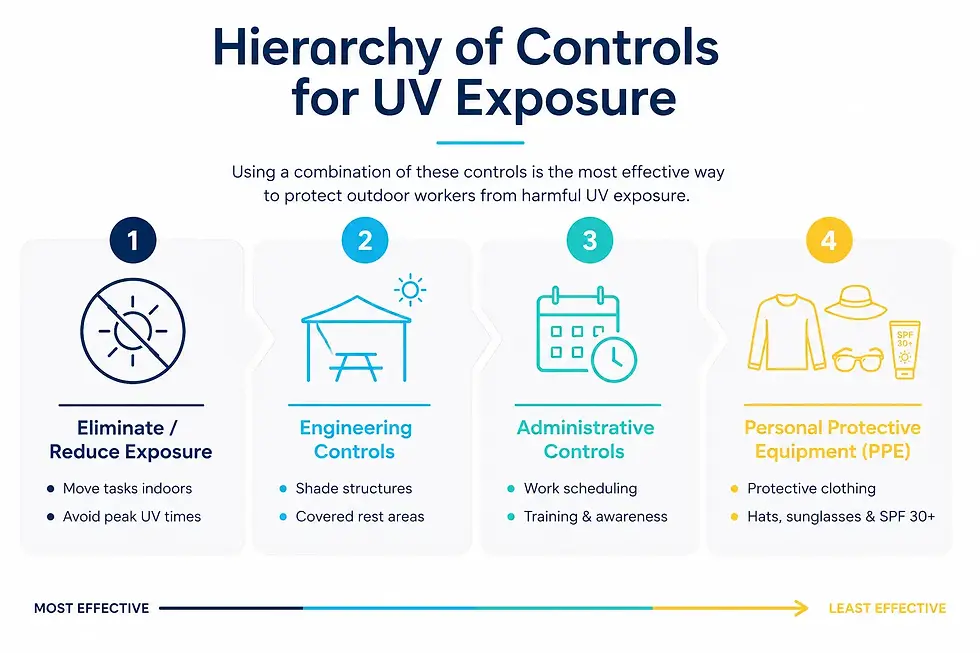
In occupational health and safety, the hierarchy of controls provides a framework for managing workplace hazards. The same principles apply when managing UV exposure.
Eliminate or Reduce Exposure
The most effective control is to eliminate or reduce exposure wherever possible. This may involve moving tasks indoors, reducing time spent outdoors, or using alternative working methods to minimise exposure.
Engineering Controls
Where outdoor work cannot be avoided, employers should consider providing shaded working areas and covered rest facilities. Even simple measures such as temporary shelters or canopies can significantly reduce exposure.
Administrative Controls
Employers can further reduce risk by adjusting working patterns to minimise exposure during peak UV periods. In the UK, UV radiation is generally strongest between 11am and 3pm from March to October.
Education and training are equally important. Employees should understand the risks associated with UV exposure, know how to recognise early signs of skin damage, and be aware of the protective measures available to them.
Personal Protective Equipment
Personal protective equipment should be viewed as the final layer of protection rather than the first. Suitable measures may include:
UV-protective clothing
Wide-brimmed hats or hard hat attachments
Appropriate sunglasses
Sunscreen with a high SPF rating
The most effective approach is usually a combination of controls rather than relying on a single measure.
Understanding the UV Index
The UV Index is a useful tool for understanding the strength of UV radiation on any given day.
When the UV Index reaches 3 or above, protective measures are recommended because UV levels are strong enough to damage skin. However, employees who spend long periods working outdoors may still require protection when the UV Index is lower, particularly if they are exposed for extended periods.
Checking the daily UV forecast can help organisations make informed decisions about outdoor work and reinforce the importance of protective measures.
The Importance of Sunscreen
While sunscreen should not be the only control measure, it remains an important part of protecting skin from UV damage.
When selecting sunscreen, employees should use a product with a Sun Protection Factor (SPF) of at least 30 and a UVA protection rating of at least four stars. Broad-spectrum products that protect against both UVA and UVB radiation are recommended.
Sunscreen should be applied to all exposed skin before going outdoors and reapplied regularly throughout the day, particularly after sweating or contact with water.
Employers may wish to make sunscreen readily available to employees who spend significant amounts of time outdoors.
Encouraging Regular Skin Checks
One of the most effective ways to improve outcomes is through early detection.
Employees should be encouraged to check their skin regularly and become familiar with their existing moles, freckles, and skin markings. Any new or unusual changes should be investigated promptly.
Monthly self-checks can help people identify changes early and seek medical advice when necessary. This includes monitoring for changes in size, shape, colour, texture, bleeding, or persistent irritation.
Early diagnosis significantly improves treatment outcomes, particularly for melanoma skin cancer.
Creating a Sun Safety Culture

Creating a culture where sun safety is taken seriously can have a lasting impact on employee health.
This starts with ensuring UV exposure is considered during risk assessments and workplace planning. Employers should provide appropriate information, training, and resources, while encouraging employees to take responsibility for protecting themselves when working outdoors.
Employers can support sun safety by:
✓ Including UV exposure within workplace risk assessments
✓ Providing access to sunscreen and shaded rest areas
✓ Encouraging regular hydration breaks
✓ Promoting the daily UV Index
✓ Providing suitable protective clothing where appropriate
✓ Educating employees about skin checks and early warning signs
By embedding sun safety into everyday health and safety practices, organisations can help protect their workforce from a risk that is often underestimated but entirely preventable.
Summer Sun Safety Checklist
As a reminder, employers should consider the following during the summer months:
✓ Review outdoor working arrangements
✓ Check risk assessments account for UV exposure
✓ Provide shade where possible
✓ Encourage the use of sunscreen and protective clothing
✓ Promote regular skin checks
✓ Remind employees that UV exposure can occur even on cloudy days
Key Takeaway
Sun safety is not just a personal responsibility. For many organisations, it is a workplace health issue that deserves the same attention as other occupational hazards.
By taking a proactive approach to UV exposure, employers can help reduce health risks, improve employee wellbeing, and create safer working environments throughout the summer months.
Looking for Occupational Health Support?
From workplace risk management and health surveillance to employee wellbeing and occupational health referrals, Insight Workplace Health helps organisations create healthier, safer, and more productive workplaces.
If you'd like to discuss how we can support your business, contact us today!


Comments